
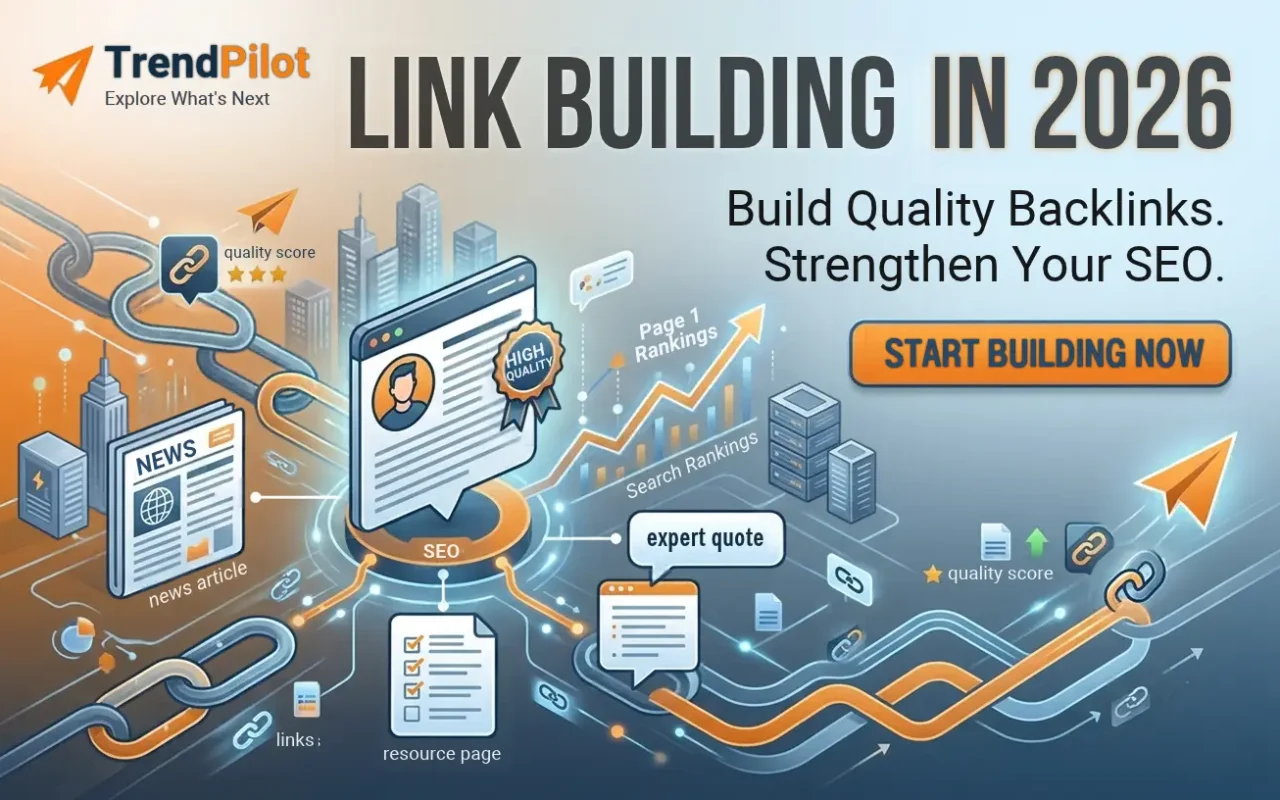
Link building remains an important part of search engine optimization. When other relevant websites link to your content, they can help users discover your website and provide search engines with useful signals about your pages.
However, link building has changed over time. Creating hundreds of random backlinks is no longer a smart approach. Businesses need to focus on relevant websites, useful content, genuine relationships, and natural link opportunities.
In this guide, we will explore effective link building strategies in 2026, understand the importance of backlinks, and learn how digital PR can help websites build a stronger online presence.
What Is Link Building in SEO?
Link building is the process of getting hyperlinks from other websites that point to your website. These links are commonly called backlinks or inbound links.
For example, imagine a business publishes a useful guide about email marketing. Another website finds the guide helpful and links to it in one of its articles. This creates a backlink for the business website.
Search engines use links to discover pages and understand how different pages are connected. Relevant backlinks can also help users find useful information from different sources.
However, not every backlink provides the same value. The website’s relevance, the context of the link, and the quality of the content all matter.
Why Are Backlinks Important for SEO?
Backlinks can support an SEO strategy in several ways.
1. Help Search Engines Discover Pages
Links help search engines find new pages and discover how websites are connected. A link from an existing page can provide another way for search engines to reach your content.
2. Bring Referral Traffic
A backlink can bring visitors directly from another website. If the link appears in a relevant article, interested readers may click it to explore your content.
3. Build Brand Awareness
When your website is mentioned by relevant blogs, publications, or industry websites, more people can discover your brand.
4. Support Website Authority and Credibility
Links from trusted and relevant websites can help establish your website’s reputation within your industry. However, backlinks do not guarantee higher rankings.
Best Link Building Strategies That Still Work in 2026
The best approach is to earn links by creating something useful and building genuine relationships with other websites.
Here are some practical link building strategies to consider.
1. Guest Posting on Relevant Websites
Guest posting means writing an article for another website in your industry. It gives you an opportunity to share useful information with a new audience and introduce your brand.
For example, a digital marketing website can contribute articles about SEO, content marketing, or online business growth to relevant industry blogs.
How to do it:
- Find websites that publish content related to your industry.
- Check their content quality and audience relevance.
- Pitch original and useful article ideas.
- Write informative content that matches their audience.
- Include a relevant author or website link only when the publisher allows it naturally.
Avoid websites that publish low-quality guest posts only to sell backlinks. Paid or sponsored placements should be properly qualified using appropriate link attributes.
2. Digital PR and Brand Mentions
Digital PR is one of the useful ways to build brand visibility and earn editorial backlinks. It involves sharing newsworthy information, original research, expert opinions, or useful stories with online publications.
For example, a startup could publish a report about changing digital marketing trends. Journalists and bloggers may reference the findings in their own articles if they find them useful.
How to use digital PR:
- Share original research or industry insights.
- Prepare expert comments on relevant topics.
- Create useful reports and statistics.
- Connect with journalists and industry publishers.
- Share company news when it offers genuine value to readers.
Digital PR focuses on earning attention and coverage rather than simply requesting links.
3. Create Link-Worthy Content
Useful content gives other websites a reason to reference your pages. Instead of creating content only for search engines, focus on resources that answer real questions.
Some examples include:
- Detailed industry guides.
- Original research and surveys.
- Statistics and data reports.
- Free templates and checklists.
- Practical how-to articles.
- Helpful comparison guides.
For example, our guide on keyword research in 2026 explains how to find relevant keywords and understand search intent. Helpful resources like these can become reference points for other content creators.
4. Broken Link Building
Broken link building involves finding links on other websites that lead to unavailable or deleted pages. You can suggest a relevant resource from your website as a replacement when it genuinely helps the publisher.
Steps to follow:
- Find relevant websites in your industry.
- Check their resource pages or articles for broken links.
- Identify the topic of the unavailable resource.
- Create or find a useful replacement on your website.
- Contact the website owner with a polite suggestion.
There is no guarantee that the website owner will replace the link, but a relevant and helpful suggestion can create an opportunity.
5. Resource Page Link Building
Some websites maintain resource pages that list useful guides, tools, and learning materials for their readers.
You can find these pages in your industry and suggest your content if it adds genuine value.
For example, a website covering digital marketing may maintain a page listing useful SEO guides and tools. A detailed SEO resource from your website could be relevant to that page.
Focus on quality and relevance instead of submitting your website to every available resource page.
6. Competitor Backlink Analysis
Competitor backlink analysis helps you understand which websites link to other businesses in your industry.
You can use tools such as Ahrefs and Semrush to explore competitor backlink profiles.
What to check:
- Websites linking to multiple competitors.
- Industry blogs and publications.
- Relevant resource pages.
- Brand mentions and editorial coverage.
- Content that attracts backlinks.
Do not copy every competitor backlink. Review each opportunity and decide whether it is relevant and worth pursuing.
7. Build Relationships Through Industry Communities
Participating in relevant communities can help your brand become more visible and build genuine professional relationships.
You can contribute to industry discussions, answer questions, share helpful resources, and connect with people in your field.
Some useful places include professional communities, industry forums, LinkedIn groups, and relevant online discussions.
Avoid posting promotional links repeatedly. Share your website only when it adds value to the conversation and follows the platform’s rules.
Link Building Methods to Avoid in 2026
Not every backlink-building method is safe or useful. Some tactics may violate Google’s spam policies and create SEO risks.
Here are some practices to avoid:
- Buying backlinks to manipulate rankings: Paid links intended to pass ranking credit can violate Google’s link spam policies.
- Automated link building: Using software or services to create large numbers of artificial backlinks can create spam risks.
- Excessive link exchanges: Repeatedly exchanging links only to manipulate rankings is not a good strategy.
- Low-quality directory submissions: Submitting websites to unrelated directories just to create backlinks offers little value.
- Comment spam: Posting promotional links in blog comments and forums can damage your website’s reputation.
- Private Blog Networks (PBNs): Creating networks of websites mainly to manipulate search rankings is risky.
Google explains these practices in its Spam Policies for Google Search.
How to Measure Link Building Results
Building backlinks is only one part of an SEO strategy. You should also track whether your efforts are creating useful results.
Here are some important metrics to monitor:
| Metric | What It Tells You |
| Referring Domains | Number of unique websites linking to your site |
| Backlinks | Total links pointing to your website |
| Referral Traffic | Visitors coming through external links |
| Link Relevance | How closely the linking website relates to your topic |
| New and Lost Links | Backlinks gained or lost over time |
| Organic Performance | Changes in search visibility and organic traffic |
You can use Google Search Console to review your website’s external links report and monitor search performance.
Tools like Ahrefs and Semrush can also help you analyse backlink profiles and track link-building opportunities.
How to Create a Simple Link Building Strategy
A clear plan makes link building easier to manage and measure.
Follow these steps:
Step 1: Identify Your Target Pages
Select the important pages you want to promote, such as service pages, product pages, or informative blog posts.
Step 2: Research Relevant Websites
Find websites that publish content related to your industry. Review their audience, content quality, and linking opportunities.
Step 3: Create Useful Content
Prepare content that provides real value. Original research, detailed guides, statistics, and helpful resources can attract references from other websites.
Step 4: Start Outreach
Contact website owners, editors, bloggers, or journalists with personalised messages. Explain why your content may be useful to their audience.
Step 5: Track Your Progress
Maintain a simple spreadsheet with the website name, contact details, target URL, outreach date, link status, and follow-up date.
Step 6: Review and Improve
Check which activities are producing relevant links and referral traffic. Focus more on methods that create genuine value.
FAQs About Link Building Strategies
1. Is link building still important in 2026?
Yes. Links help search engines discover pages and understand how content is connected. Relevant, naturally earned backlinks can support an SEO strategy.
2. What are the best link building strategies?
Guest posting on relevant websites, digital PR, link-worthy content, broken link building, resource page outreach, and competitor backlink analysis are useful strategies when done properly.
3. What is a high-quality backlink?
A high-quality backlink generally comes from a relevant and trustworthy website, appears naturally within useful content, and provides value to readers. No single metric can fully determine backlink quality.
4. Is buying backlinks safe for SEO?
Buying links to manipulate search rankings can violate Google’s spam policies. Paid advertising and sponsorship links should be qualified appropriately with rel=”sponsored” or rel=”nofollow”.
5. How many backlinks should a website build per month?
There is no fixed number of backlinks every website should build. Focus on earning relevant links naturally instead of targeting an arbitrary monthly quantity.
Final Thoughts
Link building in 2026 is about quality, relevance, and genuine connections. Creating useful content, earning digital PR coverage, contributing to relevant websites, and building industry relationships can help businesses develop a stronger backlink profile.
Avoid shortcuts such as buying links, automated submissions, and excessive link exchanges. Instead, follow a consistent strategy that focuses on providing value to readers and building your website’s online presence.
Remember, effective link building is not just about getting more backlinks. It is about earning links that make sense for your business and audience.
For more practical guides on SEO, digital marketing, and business technology, explore The Trend Pilot.



1 comment